EECP Treatment in Bangalore: A Patient Guide
If you are researching EECP treatment in Bangalore, you may be trying to understand whether this non-invasive cardiac therapy is suitable for you, how the sessions work, what the treatment may realistically help with, and how much it may cost.
At Nuva Healthcare, Indiranagar, Bengaluru, EECP enquiries should begin with a review of your cardiac history and available medical reports. EECP is not appropriate for every person with chest discomfort or coronary artery disease, and it should not be selected only because it is described as a non-surgical treatment.
For selected patients with chronic coronary disease and persistent angina where other treatment options are limited, current cardiovascular guidelines state that Enhanced External Counterpulsation may be considered for symptom relief. The strength of evidence is limited, which makes proper patient selection especially important. :contentReference[oaicite:0]{index=0}
Emergency warning: New, severe, prolonged or worsening chest pain requires urgent medical assessment. If chest discomfort occurs at rest or is accompanied by severe breathlessness, sweating, fainting, nausea, or pain spreading to the arm, back or jaw, seek emergency care immediately. Do not wait for an outpatient EECP appointment. EECP must not delay medically indicated angioplasty, bypass surgery or other urgent cardiac treatment.
Who Should Enquire About EECP Treatment in Bangalore?
EECP may be worth discussing with a heart-care team when a patient already has a diagnosed cardiac condition and continues to experience symptoms despite appropriate medical management.
People who may enquire include those with:
- known coronary artery disease
- persistent stable angina
- chest pressure or discomfort during physical activity
- reduced exercise tolerance related to a cardiac condition
- symptoms despite prescribed anti-anginal medicines
- a previous angioplasty or stent with ongoing symptoms
- a previous bypass operation with recurrent stable symptoms
- a cardiology opinion that further revascularisation is not currently appropriate
This does not mean everyone in these groups will qualify for EECP. Medical evaluation is required before starting treatment.
What Does Stable Angina Mean?
Angina is a symptom that can occur when the heart muscle does not receive enough oxygen-rich blood for its workload.
With chronic stable angina, discomfort may appear during predictable situations such as walking quickly, climbing stairs, exercising, carrying something heavy or experiencing emotional stress.
Symptoms can include:
- pressure or tightness in the chest
- heaviness or squeezing
- breathlessness with exertion
- unusual fatigue during physical activity
- discomfort extending toward the shoulder, arm, neck or jaw
However, not every episode of chest discomfort is angina. Chest pain can come from several cardiac and non-cardiac causes. Diagnosis should therefore be established before considering EECP therapy in Bangalore.
How Does EECP Therapy Work?
EECP stands for Enhanced External Counterpulsation.
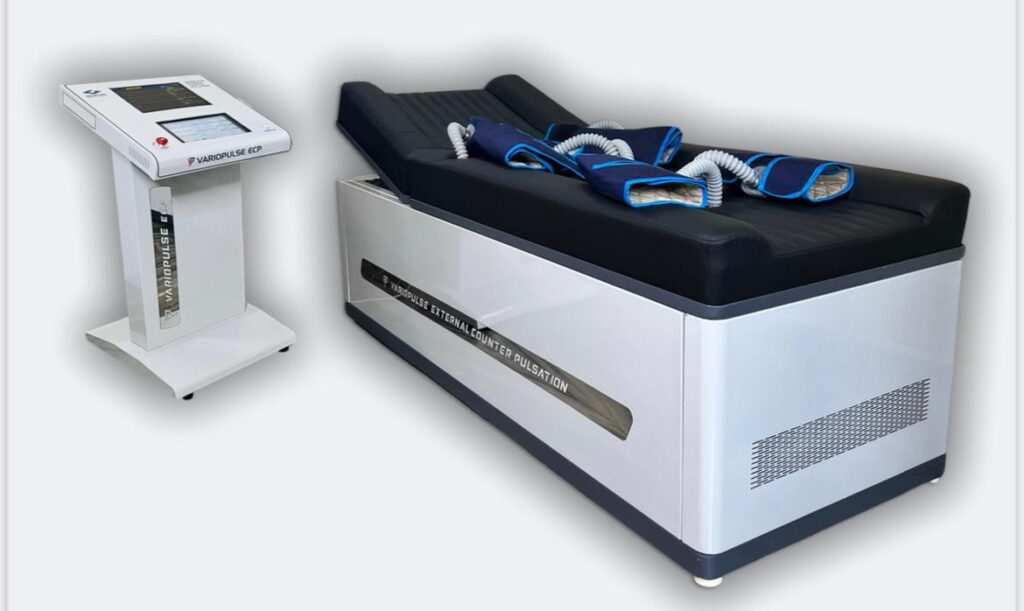
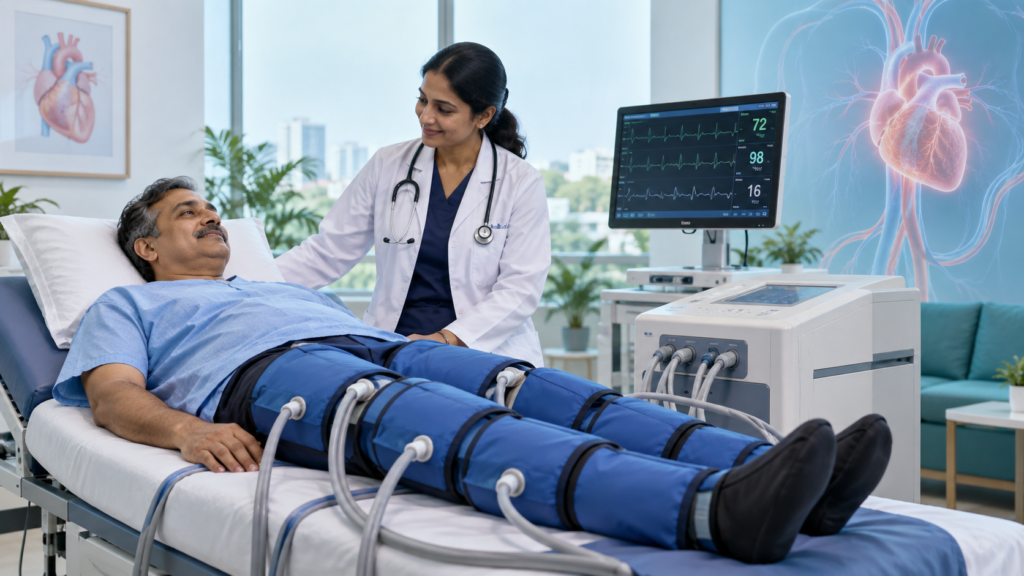
During the treatment, the patient lies on a specialised bed while pneumatic cuffs are wrapped around different areas of the legs.
The equipment monitors the heartbeat and coordinates the inflation and deflation of these cuffs with the cardiac cycle.
At one phase of the heartbeat, the cuffs inflate in sequence and apply external pressure to the lower limbs. They then deflate before the heart’s next contraction.
This timing is designed to influence circulation and reduce the workload against which the heart pumps. EECP does not involve a catheter, surgical incision or implanted device. :contentReference[oaicite:1]{index=1}
Importantly, EECP should not be described as physically clearing coronary arteries or removing plaque.
Does EECP Remove Heart Blockages?
No. EECP does not mechanically remove arterial plaque and should not be marketed as a procedure that “opens” or “cleans” coronary blockages.
It works very differently from procedures such as:
- coronary angioplasty
- stent placement
- coronary artery bypass surgery
EECP may be considered as a symptom-management option for selected patients, particularly in situations where chronic angina remains difficult to control and further revascularisation is not available or appropriate. :contentReference[oaicite:2]{index=2}
Can EECP Replace Angioplasty or Bypass Surgery?
Not as a general rule.
A patient should never assume that EECP is automatically a substitute for angioplasty or bypass surgery simply because it is non-invasive.
If investigations show that revascularisation is medically indicated, the decision should be made with the treating cardiologist or cardiac surgeon.
EECP may have a role in selected patients whose angina remains troublesome despite medical treatment and who do not have another suitable revascularisation option, but it should not delay necessary cardiac intervention. :contentReference[oaicite:3]{index=3}
What Happens During an EECP Consultation?
The consultation is one of the most important parts of the treatment process.
At Nuva Healthcare, the purpose of the initial discussion should be to understand whether the therapy is medically relevant rather than simply enrolling every enquiry into a package.
The healthcare team may ask about:
- the type and frequency of chest discomfort
- what activities trigger symptoms
- breathlessness or exercise limitation
- previous heart attacks
- angioplasty or stent history
- previous bypass surgery
- heart rhythm problems
- heart valve disease
- blood pressure
- leg circulation problems
- recent hospital admissions
- current cardiac medicines
Your existing investigations can then be reviewed to determine whether further evaluation is needed before treatment.
What Happens During an EECP Session?
Before the session begins, the treatment team positions the leg cuffs and attaches monitoring equipment.
You remain awake while lying on the treatment table.
As the therapy runs, the cuffs repeatedly tighten and release according to the timing of your heartbeat. Patients usually feel firm pressure around their legs while the system cycles.
Treatment parameters and your response are monitored during the session.
EECP is generally delivered as a course of repeated outpatient sessions rather than as a single treatment. The exact schedule should be based on the treating centre’s clinical protocol and the individual patient’s medical assessment.
What Can Patients Realistically Expect From EECP?
For appropriately selected patients with chronic angina, EECP may be considered with the aim of improving symptom control and everyday functional capacity.
Potential improvements that may be discussed include:
- less frequent stable angina symptoms
- better tolerance for ordinary physical activity
- reduced limitation caused by chest discomfort
- improved ability to perform day-to-day activities
- better quality of life for some patients
These outcomes are not guaranteed.
The evidence base for EECP is more limited than for established medical treatment and standard revascularisation strategies. Current guidelines therefore use cautious wording and recommend it only as an option that may be considered in specific circumstances. :contentReference[oaicite:4]{index=4}
Who Should Not Self-Select EECP?
Because EECP creates repeated external pressure around the legs and is synchronised with the cardiovascular system, screening is important.
Certain conditions may make the therapy unsuitable or may require additional specialist review before proceeding.
Examples can include:
- unstable or acute chest pain
- suspected acute coronary syndrome
- certain significant heart rhythm abnormalities
- significant heart valve disease
- suspected or confirmed blood clots in the legs
- severe peripheral vascular disease
- uncontrolled high blood pressure
- some severe heart or lung conditions
- active bleeding
- pregnancy
This is not a complete contraindication list. Eligibility depends on the full clinical picture and the treatment protocol being considered. Cleveland Clinic likewise notes that unstable angina is not an indication for outpatient EECP. :contentReference[oaicite:5]{index=5}
Possible Discomfort and Side Effects
Because the cuffs apply repeated pressure to the legs, some patients may notice temporary effects such as:
- skin irritation
- mild bruising
- muscle soreness
- leg discomfort
- temporary numbness or tingling
- fatigue after treatment
Any new chest discomfort, significant swelling, severe leg pain or unusual symptoms should be reported promptly to the clinical team.
EECP Treatment Cost in Bangalore
Patients actively comparing EECP treatment in Bangalore often want to understand the cost before beginning a course of therapy.
There is no responsible single price that can be quoted for every patient without considering the actual treatment plan.
The estimated cost may depend on:
- initial consultation
- review of cardiac reports
- whether additional tests are required
- recommended treatment schedule
- number of sessions planned
- monitoring requirements
- follow-up assessment
- the centre’s treatment package
Before committing to treatment, ask the clinic to explain:
- consultation charges
- session or package cost
- what is included in the package
- whether follow-up review is included
- whether investigations are charged separately
- whether the quote changes if the treatment plan changes
Nuva Healthcare can provide an estimated cost after understanding the patient’s requirements rather than relying on a generic online figure.
What Reports Should You Bring?
Bringing your previous cardiac reports can make the consultation more useful.
If available, bring:
- ECG reports
- echocardiogram
- TMT or stress-test results
- coronary angiography report
- angiography images or CD
- CT coronary angiography
- previous angioplasty records
- stent details
- previous bypass surgery records
- hospital discharge summaries
- recent blood-test results
- current medication list
- previous cardiology consultation notes
If you do not have every report, bring what is currently available. The team can advise if additional information is needed.
Should Heart Medicines Continue During EECP?
Do not stop prescribed cardiac medication simply because EECP has started.
Many patients being evaluated for EECP are already taking medicines for coronary disease, angina, cholesterol, blood pressure or diabetes.
Any change to medication should be made only by the healthcare professional responsible for your medical treatment.
EECP Therapy in Indiranagar, Bengaluru
Because EECP usually involves repeated outpatient visits, location can become an important practical factor when choosing a treatment centre.
Nuva Healthcare is located in Indiranagar, Bengaluru and may be convenient for patients travelling from:
- Indiranagar
- Domlur
- HAL
- Old Airport Road
- Jeevan Bhima Nagar
- Ulsoor
- MG Road
- Koramangala
- surrounding Bengaluru areas
Patients comparing Enhanced External Counterpulsation in Bangalore should consider not only treatment cost but also medical screening, monitoring, travel convenience and follow-up support.
How Should You Compare EECP Centres?
Before selecting a centre, consider asking:
- Will my cardiac reports be reviewed before treatment?
- How is eligibility assessed?
- Who supervises the sessions?
- How is my heartbeat used to synchronise treatment?
- What contraindications are screened for?
- How will my symptoms be reviewed during the course?
- What should I do if my chest pain changes?
- What is included in the quoted cost?
- Will the clinic tell me if another type of cardiac evaluation is more appropriate?
A responsible centre should be willing to advise against EECP when the patient’s condition makes another medical pathway more appropriate.
When Chest Pain Requires Emergency Care
EECP is scheduled outpatient therapy. It is not a treatment for an acute heart attack or unstable chest pain.
Seek urgent emergency care for:
- new severe chest pain
- rapidly worsening chest discomfort
- chest pain while resting
- severe breathlessness
- heavy sweating with chest pressure
- fainting or near-fainting
- pain spreading to the arm, jaw, shoulder or back
Do not wait for the next EECP appointment if symptoms suggest an emergency.
Similarly, if a cardiologist recommends urgent angioplasty, bypass surgery or another necessary cardiac procedure, outpatient EECP must not be used to postpone that treatment.
Considering EECP Treatment in Bangalore?
If you are actively comparing EECP treatment in Bangalore for stable angina, ongoing symptoms after a previous cardiac procedure or reduced activity tolerance, the most useful first step is to have your medical history and existing reports reviewed.
EECP may be considered for selected patients, but treatment suitability depends on the underlying heart condition, symptoms, investigations, medications and other medical factors.
At Nuva Healthcare, Indiranagar, the consultation can help you understand whether EECP is relevant to your situation, what further evaluation may be required, how the treatment process works and the expected cost based on your individual plan.
Speak with our heart-care team about report review, treatment suitability, appointment availability and estimated cost. Call/WhatsApp +91 98864 82146.
What is EECP treatment?
EECP stands for Enhanced External Counterpulsation. It is a non-invasive outpatient therapy in which inflatable cuffs around the legs operate in coordination with the heartbeat. Medical evaluation is required before treatment.
Who may be suitable for EECP therapy?
EECP may be considered for selected patients with chronic coronary disease and persistent stable angina, particularly when symptoms continue despite medical treatment and other revascularisation options are limited or unsuitable.
Does EECP remove heart blockages?
No. EECP does not physically remove coronary plaque or clear arterial blockages. It is a counterpulsation therapy that may be considered for symptom support in appropriately selected patients.
Can EECP replace angioplasty or bypass surgery?
EECP is not a guaranteed replacement for angioplasty or bypass surgery. If revascularisation is medically indicated, the recommended procedure should not be delayed in favour of outpatient EECP.
What happens during an EECP session?
The patient lies on a treatment bed while pneumatic cuffs around the legs repeatedly inflate and deflate according to the timing of the heartbeat. Monitoring is used to coordinate the treatment, and the patient remains awake throughout the session.
How many EECP sessions will I need?
EECP is normally delivered as a series of outpatient sessions. The appropriate schedule should be decided after medical evaluation and according to the treatment centre’s clinical protocol rather than assuming every patient requires exactly the same course.
Is EECP suitable for everyone?
No. Certain cardiac, vascular and other medical conditions can make EECP unsuitable or require additional assessment. Patients should not self-select treatment without reviewing their medical history and cardiac reports.
What reports should I bring for an EECP consultation?
Bring available ECG, Echo, stress-test reports, coronary angiography reports or images, previous angioplasty or bypass records, hospital discharge summaries, recent investigations and your current medication list.
What is the cost of EECP treatment in Bangalore?
Cost can vary according to consultation requirements, investigations, treatment schedule, monitoring and the package offered by the centre. Contact Nuva Healthcare for a current estimated cost based on your individual treatment requirements.
When should I seek emergency care instead of waiting for EECP?
New, severe, prolonged or worsening chest pain, chest pain at rest, severe breathlessness, sweating, fainting or pain spreading toward the arm, jaw or back requires urgent emergency medical attention. Do not wait for an EECP appointment, and do not use EECP to delay indicated angioplasty, bypass surgery or other emergency cardiac treatment.