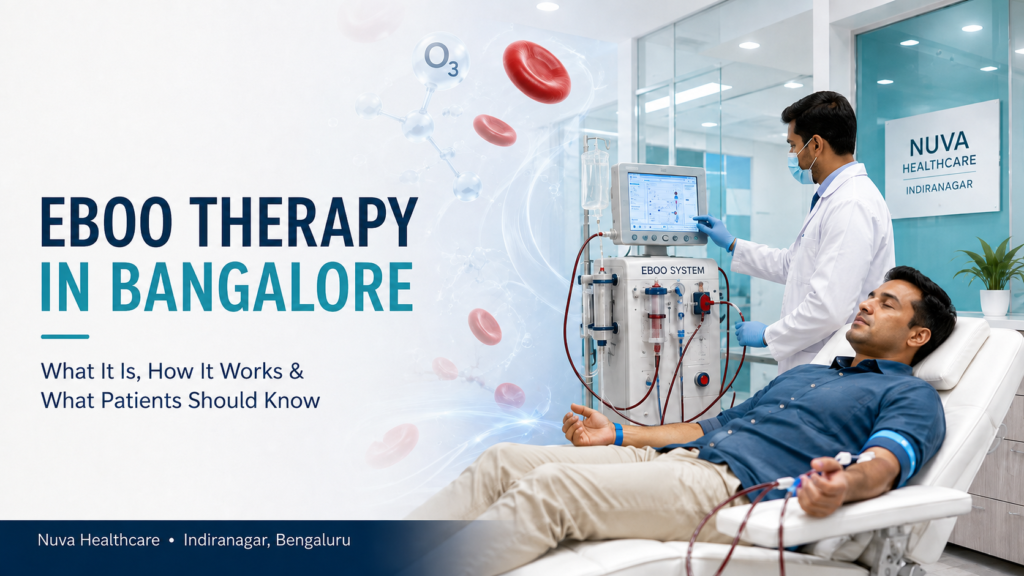
If you are researching EBOO therapy in Bangalore, you may have seen it described online using terms such as extracorporeal oxygen-ozone therapy, blood oxygenation or systemic ozone treatment. Before deciding whether to proceed, it is important to understand what the procedure actually involves, how limited the clinical evidence remains for many advertised uses, and why medical screening matters.
At Nuva Healthcare, Indiranagar, Bengaluru, an EBOO enquiry should begin with a medical consultation rather than an assumption that the procedure is appropriate. Existing diagnoses, medicines, blood-thinning treatment, previous procedures and the reason for considering EBOO all need to be reviewed.
EBOO should not be promoted as a method that “purifies the blood,” removes unspecified toxins, reverses chronic disease, boosts immunity or guarantees improvement. It is better understood as an extracorporeal ozone-based intervention whose clinical role remains under investigation.
What Is EBOO Therapy?
EBOO is commonly expanded as Extracorporeal Blood Oxygenation and Ozonation.
The word “extracorporeal” means that blood temporarily travels outside the body through a controlled medical circuit before being returned to the patient.
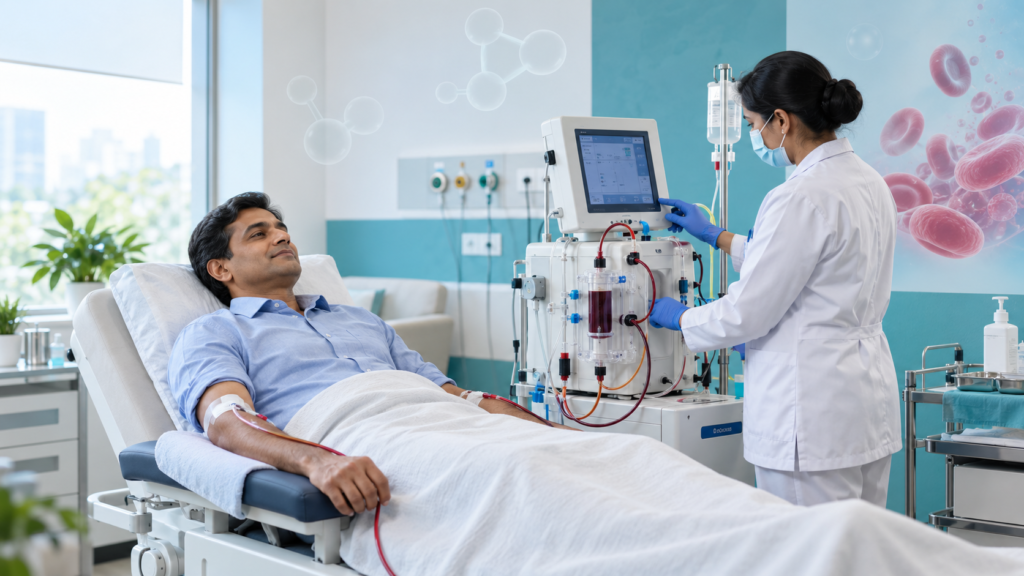
In an EBOO procedure, vascular access is established and blood moves through specialised tubing and equipment. Depending on the protocol, anticoagulation is used to prevent clotting within the extracorporeal circuit. The blood is then exposed to a controlled oxygen-ozone process within equipment designed for this purpose before being returned to the circulation.
Because this involves vascular access, an extracorporeal circuit and anticoagulation considerations, EBOO should not be treated like a casual wellness session.
Is EBOO the Same as ECMO?
No.
The similar terminology can cause confusion.
ECMO, or extracorporeal membrane oxygenation, is a critical-care life-support technology used in severe heart or lung failure. EBOO is an ozone-based extracorporeal procedure offered in some integrative or wellness settings.
They have completely different clinical purposes, patient populations and levels of evidence.
Patients researching extracorporeal blood oxygenation Bangalore should therefore make sure they understand exactly which procedure a clinic is describing.
Who May Enquire About EBOO Therapy?
Because evidence remains limited for many proposed indications, it is more responsible to begin with the patient’s medical situation rather than list diseases that EBOO supposedly treats.
A consultation may be appropriate if you:
- have heard about EBOO and want a medical explanation before deciding
- are considering it as an adjunctive wellness intervention
- have an existing diagnosis and want to know whether EBOO could reasonably be considered alongside standard care
- have previously undergone ozone-based therapies and are comparing different methods
- want to understand the risks, evidence and expected cost before committing to a procedure
- have been advised to consider EBOO but want your medical history reviewed first
An enquiry does not mean treatment will be recommended. In some cases, continuing established medical treatment, obtaining specialist review or completing further investigations may be more appropriate.
EBOO Therapy in Bangalore: Why Medical Evaluation Matters
Online marketing for systemic ozone therapies sometimes includes broad claims involving inflammation, circulation, chronic illness, “detoxification” or immune health.
Those claims should be approached cautiously.
Published research specific to EBOO is limited, and much of the direct clinical literature is older and based on relatively small patient groups. More recent reviews examining ozone therapy as a broader category continue to report substantial variation in study quality, treatment methods and outcomes.
This means a patient should not self-select EBOO based on a symptom list or testimonial.
A consultation should first answer:
- What problem are we actually trying to address?
- Has the underlying condition been properly diagnosed?
- Is there established medical treatment that should be prioritised?
- What evidence exists for EBOO for this specific reason?
- Could the risks outweigh the uncertain benefit?
- Are there medicines or medical conditions that affect suitability?
What Happens During an EBOO Consultation?
The first appointment should focus on your health history rather than immediately scheduling the procedure.
The healthcare team may ask about:
- your main medical concern
- diagnosed health conditions
- previous hospitalisations
- heart or vascular disease
- kidney or liver problems
- bleeding or clotting history
- previous thrombosis
- current prescription medicines
- blood-thinning medication
- previous reactions to heparin or other medicines
- previous ozone treatments
- recent procedures or surgery
- current symptoms
Relevant medical reports may then be reviewed.
If the clinical picture is unclear, additional medical assessment may be recommended before EBOO is considered.
How Does an EBOO Session Work?
The exact procedure can vary according to the device and clinical protocol, so patients should ask the treating team to explain their specific system.
In general, EBOO involves establishing venous access so that blood can circulate through a sterile extracorporeal pathway.
The system is designed to:
- withdraw blood into the extracorporeal circuit
- maintain controlled blood flow through the system
- use anticoagulation according to the treatment protocol
- expose the circulating blood to a controlled oxygen-ozone process
- return the blood to the patient
- allow clinical monitoring throughout the session
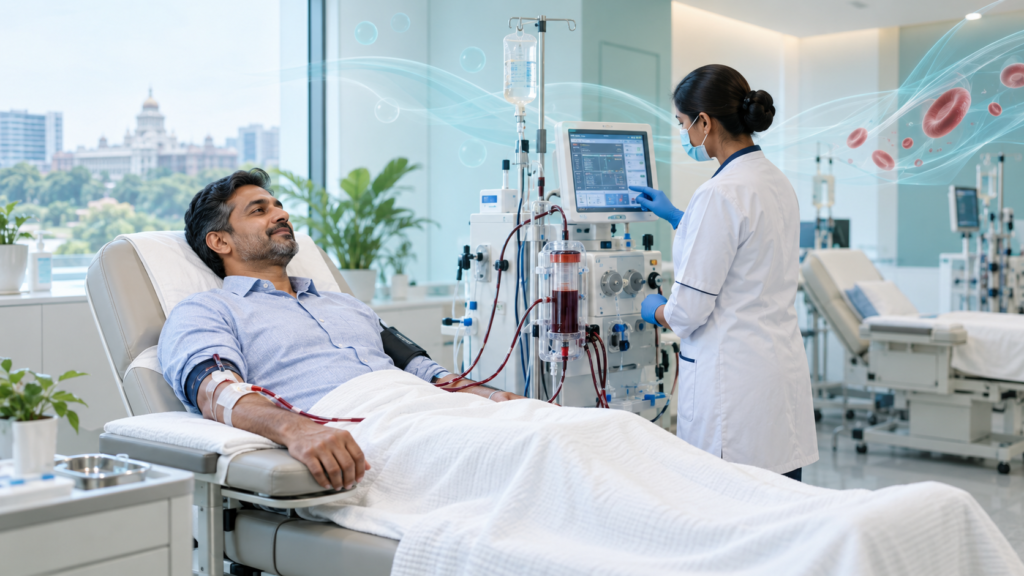
Because blood is moving through external tubing, the procedure requires careful attention to sterile technique, vascular access, blood pressure, anticoagulation and circuit function.
What Should You Expect During the Procedure?
Before starting, baseline observations may be taken according to the clinic’s protocol.
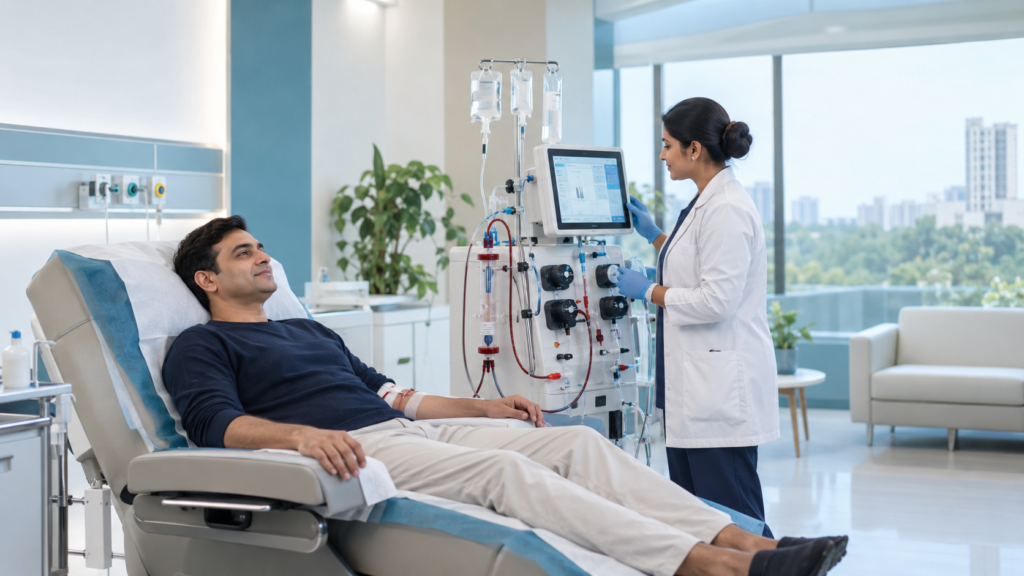
Vascular access is then established. You remain under supervision while blood circulates through the extracorporeal system.
Depending on the procedure and individual patient, monitoring may include:
- blood pressure
- pulse
- oxygen saturation
- general clinical condition
- vascular access
- extracorporeal circuit function
Tell the clinical team immediately if you experience unusual dizziness, significant pain, breathlessness, chest discomfort, weakness or another unexpected symptom.
Does EBOO Purify or Detox the Blood?
It is better not to describe EBOO as “blood purification.”
The term can imply that unspecified toxins are being mechanically removed from the bloodstream, which is not an evidence-based way to explain EBOO.
Similarly, claims that EBOO “detoxifies the entire body” are difficult to define scientifically and should not be presented as proven outcomes.
The liver, kidneys, lungs and gastrointestinal system already play major roles in processing and eliminating metabolic waste.
A responsible explanation of EBOO should focus on what the equipment actually does rather than using broad detox language.
Does EBOO Boost the Immune System?
Claims that a treatment “boosts immunity” can be misleading because immune function is complex and more activity is not necessarily better.
Laboratory research has explored how ozone exposure can influence oxidative and cellular signalling pathways, but that does not establish that EBOO produces a clinically beneficial immune effect in every patient.
EBOO should therefore not be marketed as a proven immune-boosting therapy.
What Benefits Can Realistically Be Expected?
This is one of the most important questions to discuss before treatment.
Specific EBOO research remains limited. Earlier studies explored the procedure in selected vascular conditions, but these studies are not enough to establish broad effectiveness across the wide range of illnesses for which systemic ozone treatments are sometimes marketed.
Broader reviews of ozone therapy also find inconsistent results and generally low certainty of evidence across many clinical indications.
Therefore, any discussion of possible benefit needs to be specific to:
- the patient’s diagnosis
- the reason treatment is being considered
- the available evidence for that indication
- other treatment options
- the patient’s existing medical care
No responsible provider should guarantee disease reversal, improved immunity, removal of toxins or permanent results.
Should EBOO Replace Conventional Medical Treatment?
No.
EBOO should not be used as a reason to discontinue evidence-based medical treatment.
Do not stop prescribed medicines, delay surgery, postpone cardiovascular treatment, stop cancer therapy or avoid specialist care because you are considering EBOO.
Any adjunctive therapy should be discussed in the context of your existing treatment plan.
What Are the Risks of an Extracorporeal Procedure?
The fact that EBOO is not surgery does not mean it is risk-free.
Extracorporeal procedures involve blood leaving the body and travelling through an artificial circuit. Potential considerations include:
- difficulty obtaining or maintaining vascular access
- bleeding or bruising at access sites
- infection if sterile technique is compromised
- blood-pressure changes or light-headedness
- clotting within the circuit
- bleeding related to anticoagulation
- reactions related to medications or circuit materials
- blood-cell injury under inappropriate conditions
- other procedure-specific complications
The probability and severity of risk depend on the equipment, anticoagulation method, treatment protocol and patient’s medical condition.
This is why appropriate equipment, trained personnel and medical supervision are important.
Who Should Not Self-Select EBOO?
Additional assessment is particularly important if you have:
- a bleeding disorder
- current anticoagulant or antiplatelet treatment
- a history of blood clots
- a previous significant reaction to heparin, if heparin is proposed
- significant anaemia
- unstable cardiovascular disease
- serious kidney or liver disease
- an active infection
- recent major surgery
- difficult vascular access
- multiple significant medical conditions
This is not a complete list of contraindications. Suitability depends on the exact EBOO protocol and individual clinical assessment.
What Reports Should You Bring?
If you already have medical reports, bring them to the consultation rather than repeating investigations unnecessarily.
Useful information may include:
- recent doctor consultation notes
- current diagnosis
- hospital discharge summaries
- current medication and supplement list
- recent complete blood count if available
- kidney and liver function reports
- coagulation-related reports where relevant
- cardiac reports if you have cardiovascular disease
- previous surgery or procedure records
- details of previous ozone-based treatment
The healthcare team can then decide whether further investigation is medically necessary.
EBOO Treatment Cost in Bangalore
Patients comparing EBOO treatment Bangalore options often want to understand the financial commitment before scheduling treatment.
There is no responsible universal price that should be invented for every patient.
Estimated cost may depend on:
- initial medical consultation
- pre-procedure investigations
- the specific EBOO protocol
- consumables used
- vascular-access requirements
- medical monitoring
- whether more than one session is proposed
- follow-up assessment
Before paying for a package, ask:
- Why is EBOO being recommended for me?
- What evidence supports this use?
- What exactly is included in the quoted cost?
- What investigations are required?
- How many sessions are being proposed and why?
- What are the possible risks?
- When will the treatment plan be reassessed?
Estimated cost should be discussed after medical evaluation rather than using a generic promotional price.
EBOO Therapy in Indiranagar, Bengaluru
Nuva Healthcare is located in Indiranagar, Bengaluru, making consultation convenient for patients travelling from areas such as:
- Indiranagar
- Domlur
- HAL
- Old Airport Road
- Jeevan Bhima Nagar
- Ulsoor
- MG Road
- Koramangala
- nearby Bengaluru neighbourhoods
When comparing clinics offering extracorporeal blood oxygenation Bangalore, consider more than the treatment price.
Ask whether there is medical screening, appropriate monitoring, sterile extracorporeal equipment, clear discussion of evidence limitations and a plan for managing complications.
How to Compare EBOO Providers
Before choosing a provider, consider asking:
- Who assesses my medical suitability?
- What exact EBOO method and equipment are being used?
- What vascular access is required?
- Is anticoagulation used, and how is it monitored?
- What evidence supports EBOO for my reason for treatment?
- What risks are discussed before consent?
- How am I monitored during the procedure?
- What happens if I develop a complication?
- Will the clinic advise against treatment if I am not suitable?
Be cautious of providers promising detoxification, guaranteed disease reversal, permanent benefits or universal immune enhancement.
Internal Links to Add
Useful Nuva Healthcare internal links for this article can include:
- ozone therapy in Bangalore
- EECP treatment in Bangalore
- wellness therapies at Nuva Healthcare
Considering EBOO Therapy in Bangalore?
If you are comparing EBOO therapy in Bangalore, begin with a medical consultation rather than deciding based on detox, blood-purification or disease-reversal claims.
EBOO is an extracorporeal ozone-based procedure that requires vascular access, appropriate equipment, clinical monitoring and careful consideration of anticoagulation and other risks.
Evidence remains limited for many conditions for which EBOO is promoted, so the decision to proceed should be individualised and should not replace established medical treatment.
At Nuva Healthcare, Indiranagar, a consultation can help review your medical history, reports, treatment goals, suitability, evidence limitations and estimated cost before any procedure is considered.
Book a medical consultation at Nuva Healthcare, Indiranagar, Bengaluru. Call/WhatsApp +91 98864 82146.
What is EBOO therapy?
EBOO commonly refers to Extracorporeal Blood Oxygenation and Ozonation. Blood temporarily circulates outside the body through specialised medical equipment, undergoes a controlled oxygen-ozone process and is returned to the patient. Medical evaluation and supervision are required.
Is EBOO the same as ECMO?
No. ECMO is critical-care life support used for severe heart or lung failure. EBOO is an extracorporeal ozone-based procedure offered in some integrative healthcare settings. The two should not be confused.
Does EBOO purify or detox the blood?
EBOO should not be described as proven blood purification or whole-body detoxification. These terms can imply removal of unspecified toxins without clear clinical evidence. A responsible explanation should focus on the actual extracorporeal procedure and the evidence available for the specific intended use.
Can EBOO boost immunity?
EBOO should not be promoted as a proven immune-boosting therapy. Ozone has been studied for effects on biological signalling pathways, but this does not establish that EBOO provides a clinically beneficial immune effect for every patient.
What conditions can EBOO treat?
Evidence is limited for many conditions for which EBOO is promoted. Rather than assuming it treats a particular disease, patients should discuss their diagnosis with a medical professional and review the available evidence for that specific indication.
Is EBOO a replacement for conventional medical treatment?
No. EBOO should not be used to stop prescribed medication, delay necessary surgery or replace established treatment for serious medical conditions. Any adjunctive use should be discussed alongside your existing medical care.
What are the risks of EBOO therapy?
EBOO involves vascular access and an extracorporeal blood circuit. Potential considerations can include bleeding, bruising, infection, clotting, blood-pressure changes, vascular-access problems and complications related to anticoagulation or the treatment circuit. Individual risk depends on the patient’s health and the protocol used.
Who should be cautious about EBOO therapy?
People with bleeding or clotting disorders, significant anaemia, unstable cardiovascular disease, serious kidney or liver disease, recent major surgery, difficult vascular access or medicines affecting clotting require careful assessment. This is not a complete contraindication list, so medical screening is important.
What is the cost of EBOO therapy in Bangalore?
Cost can depend on consultation requirements, investigations, the specific EBOO protocol, consumables, medical monitoring, number of sessions and follow-up. Nuva Healthcare can discuss an estimated cost after reviewing the patient’s individual requirements.
How can I book an EBOO consultation at Nuva Healthcare?
You can contact Nuva Healthcare in Indiranagar, Bengaluru to discuss your medical history, available reports, treatment suitability, evidence limitations, appointment availability and estimated cost. Call or WhatsApp +91 98864 82146.