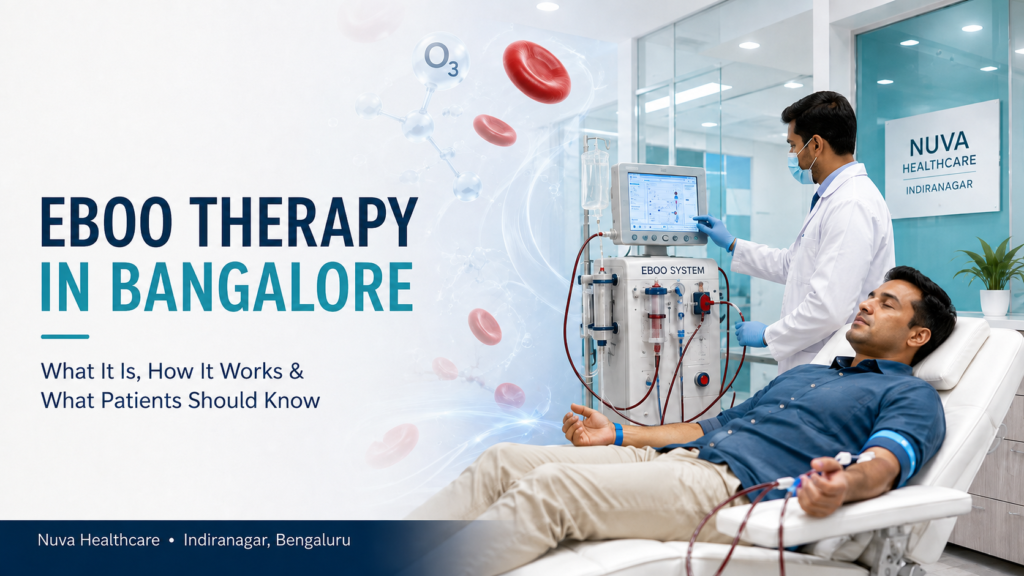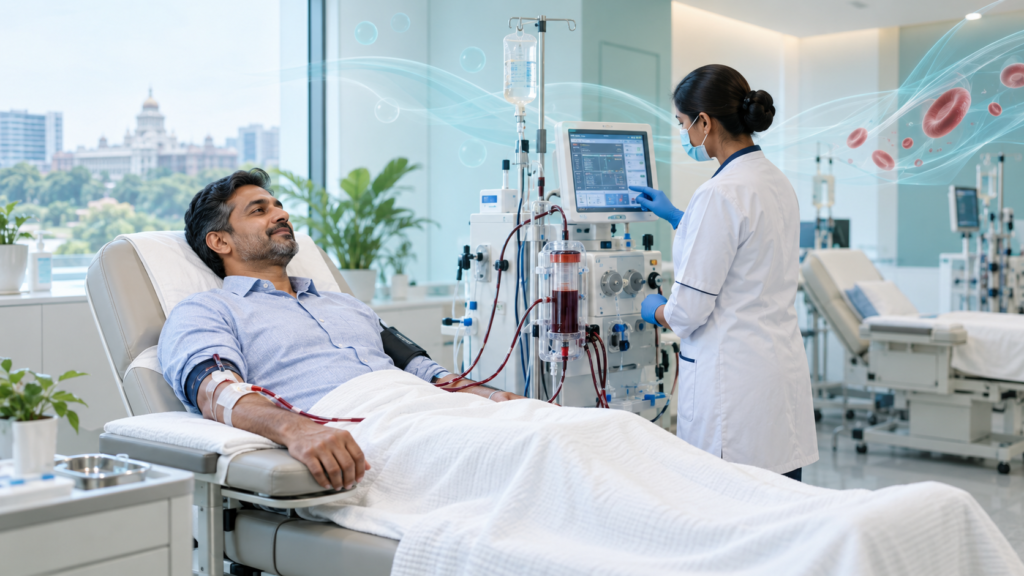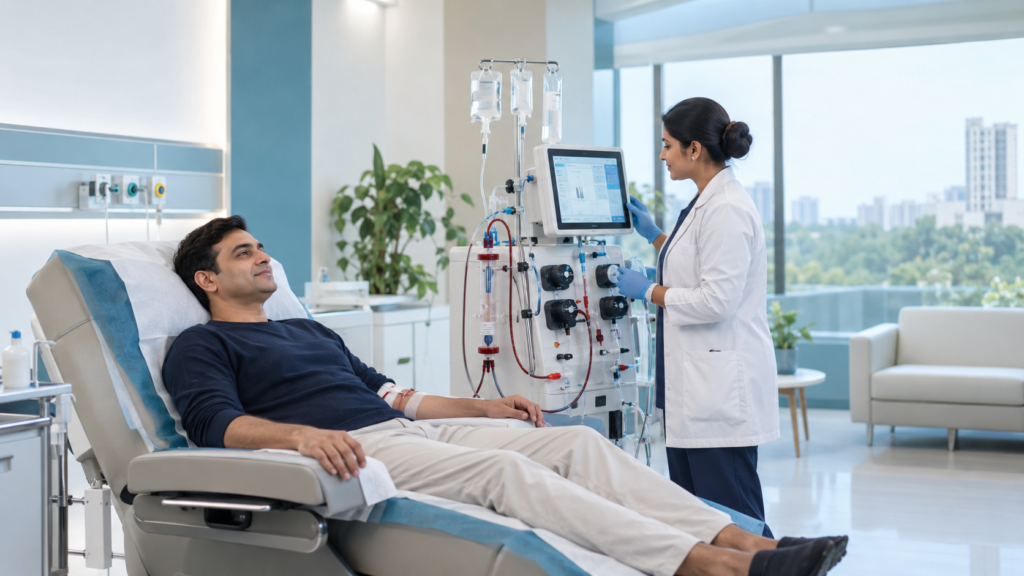
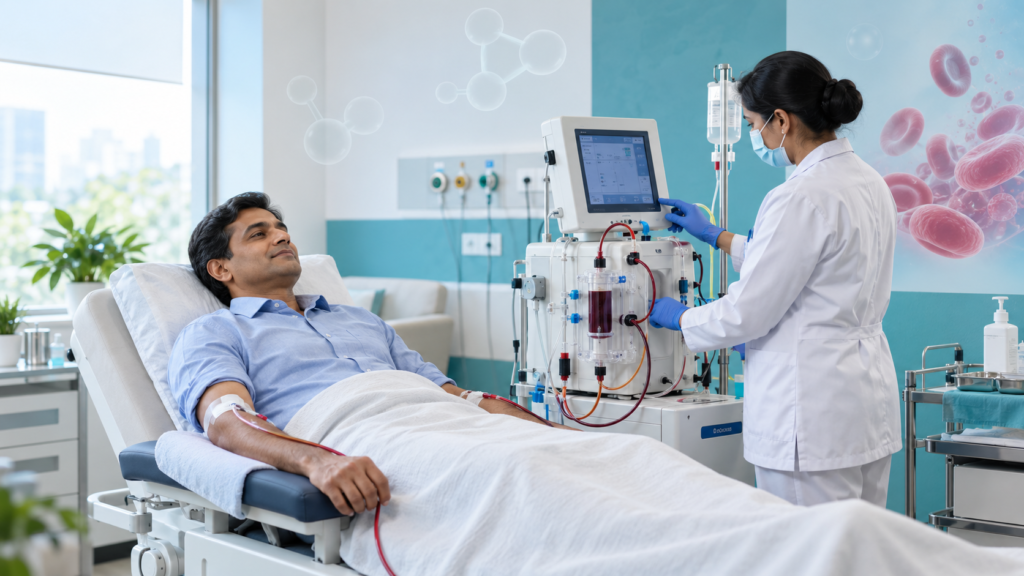
If you are trying to understand how EBOO therapy works, it is important to look beyond terms such as “blood cleansing,” “detox” or “oxygenation” that are sometimes used in promotional material. EBOO is an extracorporeal procedure, meaning that blood temporarily circulates outside the body through specialised medical equipment before being returned to the patient.
At Nuva Healthcare, Indiranagar, Bengaluru, an EBOO enquiry should begin with medical evaluation. The procedure involves vascular access, an external blood circuit and clinical monitoring, so suitability cannot be decided from symptoms or wellness goals alone.
Evidence specific to EBOO remains limited for many conditions for which ozone-based therapies are promoted. Patients should therefore understand the procedure, potential risks, evidence limitations and available alternatives before deciding whether it may be considered.
What Does EBOO Mean?
EBOO is commonly used as an abbreviation for Extracorporeal Blood Oxygenation and Ozonation.
“Extracorporeal” means outside the body. During the procedure, blood is withdrawn through vascular access and circulated through a controlled external circuit.
Within that circuit, the blood is exposed to a carefully controlled oxygen-ozone process using equipment designed for the particular protocol. The blood is then returned to the patient’s circulation.
Because blood is temporarily travelling through external tubing and equipment, EBOO is different from simpler wellness procedures. Sterile technique, vascular access, anticoagulation considerations and continuous supervision are important parts of the process.
How EBOO Therapy Works Step by Step
The exact EBOO procedure can vary depending on the equipment and clinical protocol used. Patients should ask the treating team to explain the specific system being offered rather than assuming all EBOO machines operate identically.
Step 1: Medical Assessment
Before a procedure is considered, the healthcare professional reviews why the patient is interested in EBOO and whether there are medical reasons to proceed cautiously or avoid the procedure.
The review may include:
- existing medical diagnoses
- heart and vascular history
- kidney and liver health
- bleeding or clotting problems
- previous thrombosis
- current medicines
- anticoagulant or antiplatelet use
- previous procedures or surgery
- previous reactions to medications
- relevant blood-test results
Step 2: Vascular Access
The procedure requires access to the bloodstream so blood can travel through the extracorporeal circuit and return to the patient.
The precise access method depends on the system and clinical protocol. This is one reason EBOO requires trained personnel rather than being treated as a self-directed wellness treatment.
Step 3: Anticoagulation Consideration
Blood can clot when it comes into contact with an extracorporeal circuit. Depending on the protocol, an anticoagulant may therefore be required to help maintain blood flow through the system.
This introduces additional considerations for patients with bleeding problems, clotting disorders, low blood counts or medicines that already affect clotting.
The exact anticoagulation method should be explained during consultation.
Step 4: Blood Circulates Through the External Circuit
Once the system is established, blood moves through controlled tubing outside the body.
A pump or other flow-control mechanism within the equipment maintains circulation according to the treatment protocol.
The treatment team monitors both the patient and the circuit during this process.
Step 5: Controlled Oxygen-Ozone Exposure
Within the extracorporeal equipment, circulating blood is exposed to a medical oxygen-ozone mixture according to the device and protocol being used.
Ozone is highly reactive, which is why concentration and delivery cannot be treated casually.
Researchers have proposed that controlled ozone exposure may influence oxidative signalling and other biological pathways. However, a proposed biological mechanism does not establish that EBOO provides a proven clinical benefit for every disease or patient.
Step 6: Blood Returns to the Patient
After travelling through the designated treatment circuit, the blood is returned to the circulation.
This cycle continues according to the planned session protocol while the patient remains supervised.
Step 7: Completion and Post-Procedure Observation
At the end of the procedure, the extracorporeal circulation is stopped and vascular access is managed according to clinical protocol.
The patient may then be observed before leaving, particularly for symptoms such as dizziness, bleeding from the access site, unusual weakness or other unexpected reactions.
Is EBOO the Same as Dialysis?
No.
The procedures may look superficially similar because both involve blood travelling outside the body through specialised tubing and equipment.
Dialysis has an established medical purpose of replacing important kidney functions in patients who require renal replacement therapy.
EBOO is an ozone-based extracorporeal intervention with a different intended purpose and a substantially different evidence base.
Patients should not interpret the presence of an extracorporeal circuit as meaning the procedures are medically equivalent.
Is EBOO the Same as ECMO?
No. ECMO, or extracorporeal membrane oxygenation, is an intensive-care life-support treatment used in selected patients with severe heart or lung failure.
EBOO is not a substitute for ECMO and is not an emergency life-support procedure.
The terms can sound similar, so patients researching extracorporeal ozone therapy should confirm exactly what treatment a clinic is offering.
Does EBOO Purify the Blood?
It is more medically responsible to avoid describing EBOO as “blood purification.”
That phrase may suggest that harmful substances or unspecified toxins are being mechanically removed from the bloodstream, which is not an established way to describe the procedure.
Similarly, EBOO should not be advertised as a whole-body detox treatment.
The kidneys, liver, lungs and other physiological systems already perform essential functions involved in metabolism and waste handling.
Patients should ask for a specific explanation of what the EBOO equipment does rather than relying on broad detox language.
Does EBOO Boost Immunity?
Claims that EBOO “boosts the immune system” should also be approached cautiously.
Ozone exposure has been investigated for effects on oxidative and cellular signalling pathways, but that does not establish that extracorporeal ozone therapy improves immunity in a clinically beneficial way for every patient.
Immune function is complex, and simply increasing immune activity would not necessarily be beneficial.
What Conditions Is EBOO Proven to Treat?
This question deserves particular caution.
Specific EBOO research is limited. Earlier clinical work explored the procedure in selected vascular conditions, but the published evidence is not sufficient to establish EBOO as a standard treatment for the wide range of chronic diseases sometimes mentioned in online marketing.
Broader research into ozone therapy also uses very different administration methods, doses and patient populations. Results from one form of ozone therapy should not automatically be assumed to apply to EBOO.
For many proposed indications, evidence remains uncertain or investigational.
A responsible consultation should therefore focus on:
- your actual diagnosis
- the purpose of considering treatment
- evidence relevant to that specific condition
- established treatment alternatives
- your individual risks
What Potential Benefits Can Patients Realistically Expect?
No responsible provider should promise a particular clinical result before evaluating the patient.
Theoretical mechanisms and preliminary clinical observations have generated interest in EBOO, but evidence remains insufficient to guarantee improvements in symptoms, circulation, inflammatory conditions or general wellness.
Claims such as the following should be treated cautiously:
- permanent disease reversal
- complete detoxification
- removal of all toxins
- guaranteed immune enhancement
- universal improvement in circulation
- cure of chronic disease
For selected patients, EBOO may be discussed as an adjunctive or investigational approach after medical evaluation, but expectations should remain proportional to the evidence.
Should EBOO Replace Regular Medical Treatment?
No.
EBOO should not be used as a reason to stop prescribed medicines or delay established treatment.
Patients should not postpone:
- necessary cardiac treatment
- cancer treatment
- infection management
- kidney care
- surgery recommended for a clear medical indication
- specialist evaluation
Any adjunctive treatment should fit around necessary medical care rather than replace it without appropriate evidence.
What Are the Risks of the EBOO Procedure?
Although EBOO does not involve conventional surgery, it is still an invasive extracorporeal procedure because vascular access is required and blood circulates outside the body.
Potential risks and considerations may include:
- bleeding or bruising around the access site
- infection associated with vascular access
- difficulty obtaining or maintaining vascular access
- clot formation within the extracorporeal circuit
- bleeding related to anticoagulation
- blood-pressure changes
- dizziness or weakness
- reactions to medications or materials used during the procedure
- other device- or circuit-related complications
Risk depends on the patient’s health, vascular access, equipment, anticoagulation approach and treatment protocol.
This is why EBOO requires appropriate clinical monitoring.
Who Should Not Self-Select EBOO?
Extra assessment is important if you have:
- a known bleeding disorder
- significant anaemia
- current anticoagulant therapy
- previous blood-clotting problems
- unstable cardiovascular disease
- serious kidney or liver disease
- recent major surgery
- an active significant infection
- a previous reaction to anticoagulant medication
- difficult vascular access
- multiple serious medical conditions
Other patient-specific contraindications may apply depending on the exact system and protocol.
The correct question is not simply “Can I undergo EBOO?” but “Does the potential reason for using EBOO justify the procedure and its risks in my case?”
What Happens at an EBOO Consultation?
At Nuva Healthcare, the consultation should first establish why you are considering the procedure.
Your medical history, current treatment and available reports can then be reviewed.
The consultation should also give you an opportunity to ask:
- Why is EBOO being considered?
- What evidence supports it for my situation?
- What are the alternatives?
- What vascular access will be required?
- Will anticoagulation be used?
- How will I be monitored?
- What complications are possible?
- How many sessions are being proposed?
- How will any benefit be evaluated?
A responsible evaluation may also conclude that EBOO is not appropriate.
What Reports Should You Bring?
Bring existing medical information rather than arranging unnecessary investigations before the consultation.
Useful reports may include:
- recent consultation notes
- hospital discharge summaries
- current medication list
- complete blood count if recently available
- kidney-function reports
- liver-function reports
- coagulation tests where relevant
- cardiac reports if you have cardiovascular disease
- previous surgery records
- details of previous ozone treatments
Further tests, if needed, should be chosen according to the individual medical evaluation.
How Much Does an EBOO Procedure Cost?
Patients comparing EBOO services naturally want to understand the expected cost.
There is no responsible universal price that applies to every patient, and an amount should not be invented before understanding the treatment plan.
The estimated cost may depend on:
- initial medical consultation
- required investigations
- the equipment and procedure protocol
- single-use consumables
- vascular-access requirements
- clinical monitoring
- number of sessions proposed
- follow-up assessment
Before paying for a treatment package, ask what is included, why multiple sessions are recommended and when the decision to continue treatment will be reviewed.
Extracorporeal Ozone Therapy in Indiranagar, Bengaluru
Patients looking for EBOO or extracorporeal ozone therapy in Bengaluru may find Nuva Healthcare in Indiranagar convenient for consultation and evaluation.
The location may be accessible for people travelling from:
- Indiranagar
- Domlur
- HAL
- Old Airport Road
- Jeevan Bhima Nagar
- Ulsoor
- MG Road
- Koramangala
- nearby Bengaluru areas
When comparing EBOO providers, location and price should not be the only considerations. Appropriate screening, sterile procedure technique, clinical supervision and transparent discussion of evidence limitations are particularly important for an extracorporeal procedure.
How to Compare EBOO Clinics
Before choosing a provider, ask:
- Who performs the medical suitability assessment?
- What EBOO system is being used?
- How is vascular access managed?
- How is anticoagulation handled?
- What monitoring takes place during treatment?
- What evidence supports the proposed use?
- How are adverse events managed?
- What is included in the quoted cost?
- Will the clinic recommend against EBOO if it is not appropriate?
Avoid relying on providers whose main explanation consists of detoxification, blood cleansing, immune boosting or guaranteed disease reversal.
Internal Links to Add
Useful Nuva Healthcare internal links for this page can include:
- EBOO therapy in Bangalore
- ozone therapy in Bangalore
- wellness therapies at Nuva Healthcare
Still Wondering How EBOO Therapy Works?
If you are researching how EBOO therapy works, remember that it is more than an ozone wellness session. EBOO involves vascular access, extracorporeal circulation, controlled oxygen-ozone exposure, possible anticoagulation and medical monitoring.
Evidence remains limited for many advertised indications, and the procedure should not be promoted as blood purification, whole-body detoxification, disease reversal or guaranteed immune enhancement.
A consultation can help you understand whether there is a reasonable medical basis to consider EBOO, what alternatives are available, what risks apply to you and what the estimated cost would be before deciding on treatment.
Book a medical consultation at Nuva Healthcare, Indiranagar, Bengaluru. Call/WhatsApp +91 98864 82146.
What is EBOO therapy?
EBOO commonly stands for Extracorporeal Blood Oxygenation and Ozonation. Blood temporarily circulates outside the body through specialised equipment, undergoes a controlled oxygen-ozone process and is then returned to the patient’s circulation.
How does EBOO therapy work?
EBOO involves vascular access, an extracorporeal blood circuit and controlled exposure to a medical oxygen-ozone mixture according to the equipment and protocol being used. The patient remains clinically monitored during the procedure.
Does EBOO purify or detox the blood?
EBOO should not be described as proven blood purification or whole-body detoxification. These terms can imply removal of unspecified toxins without established clinical evidence. Patients should focus on what the actual extracorporeal procedure does.
Does EBOO boost the immune system?
EBOO should not be promoted as a proven immune-boosting treatment. Ozone has been studied for effects on biological signalling pathways, but that does not establish clinically beneficial immune enhancement for every patient.
What conditions does EBOO treat?
Evidence remains limited for many conditions for which EBOO is promoted. Suitability should be discussed according to the patient’s specific diagnosis, existing treatment and the quality of evidence for the proposed use.
Is EBOO the same as dialysis or ECMO?
No. Although all involve extracorporeal equipment in different contexts, dialysis and ECMO are established medical treatments with specific renal or critical-care purposes. EBOO is an ozone-based extracorporeal procedure and should not be considered equivalent to either treatment.
What are the risks of an EBOO procedure?
Potential considerations include vascular-access complications, bruising or bleeding, infection, clotting within the circuit, blood-pressure changes, anticoagulation-related bleeding and other procedure- or equipment-related complications. Individual risk requires medical assessment.
Who should be cautious about EBOO therapy?
People with bleeding or clotting disorders, significant anaemia, unstable cardiovascular disease, serious kidney or liver disease, recent major surgery, difficult vascular access or medicines affecting clotting require careful medical assessment before EBOO is considered.
How much does EBOO treatment cost in Bangalore?
Cost can vary according to consultation, required investigations, the procedure protocol, consumables, vascular access, clinical monitoring, number of sessions and follow-up. Nuva Healthcare can discuss an estimated cost after medical evaluation.
How can I book an EBOO consultation in Indiranagar?
You can contact Nuva Healthcare in Indiranagar, Bengaluru to discuss your medical history, reports, EBOO suitability, evidence limitations, procedure details and estimated cost. Call or WhatsApp +91 98864 82146.