
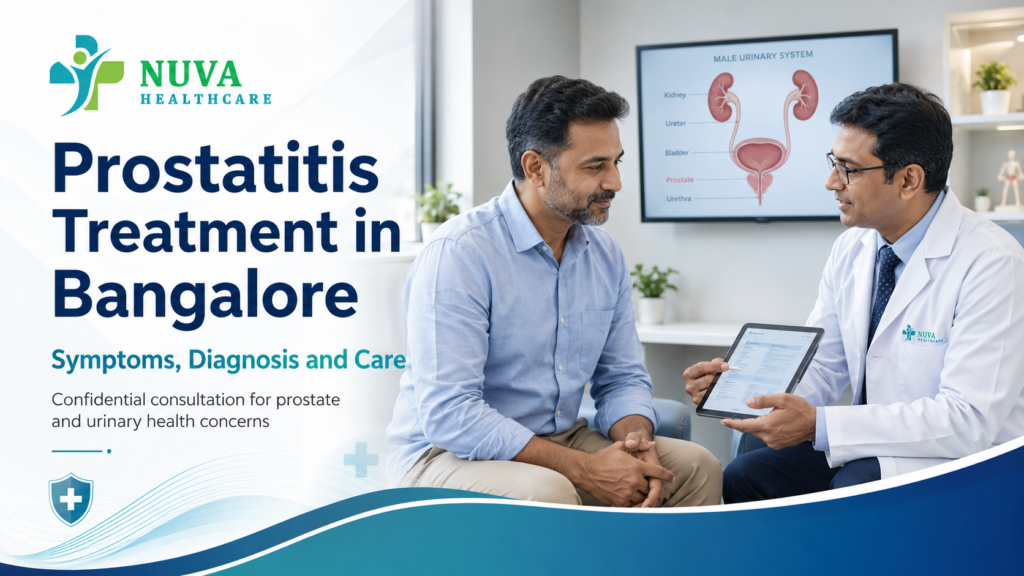
Pain or discomfort while urinating, frequent urination, pelvic pain and discomfort during ejaculation can be difficult to discuss. However, these symptoms should not be ignored because several urinary and prostate-related conditions can cause them.
Nuva Healthcare provides confidential consultation and treatment guidance for men experiencing prostate and urinary-health concerns in Bangalore. The first step is identifying the possible cause, as prostatitis is not one single condition and treatment differs depending on whether the symptoms are caused by a bacterial infection, chronic pelvic pain or another urinary problem.
Nuva Healthcare
Manjushree, No. 3520, 14th A Main Road,
HAL 2nd Stage, Indiranagar,
Bengaluru, Karnataka – 560038
Call or WhatsApp: +91 98864 82146
Prostatitis requires proper medical evaluation. Treatment suitability, duration and results vary depending on the diagnosis and the patient’s overall health.
What Is Prostatitis?
Prostatitis is a condition involving inflammation of the prostate gland and, in some cases, discomfort in the surrounding pelvic region.
The prostate is a small gland located below the bladder. It surrounds part of the urethra—the tube that carries urine out of the body. Inflammation or infection affecting this area may therefore cause urinary symptoms, pelvic pain and ejaculation-related discomfort.
Prostatitis is different from:
- Benign prostate enlargement, commonly called BPH
- Prostate cancer
- Bladder infection
- Kidney stones
- Sexually transmitted infections
- Erectile dysfunction
Some of these conditions may cause similar symptoms, which is why self-diagnosis based only on internet information is not recommended.
Types of Prostatitis
Medical professionals generally classify prostatitis into four categories.
1. Acute Bacterial Prostatitis
Acute bacterial prostatitis is caused by a bacterial infection and begins suddenly.
Symptoms may be severe and can include:
- High fever
- Chills
- Painful or burning urination
- Difficulty passing urine
- Pelvic, genital or lower-back pain
- Nausea or vomiting
- Weak urine flow
- Inability to urinate
This condition requires urgent medical attention. Patients with severe infection, inability to urinate, vomiting or significant weakness may require hospital treatment.
2. Chronic Bacterial Prostatitis
Chronic bacterial prostatitis is a recurring or long-lasting bacterial infection of the prostate.
Symptoms may be less severe than acute prostatitis but can continue or repeatedly return over several months. Some patients experience recurrent urinary tract infections.
Treatment may require a longer course of prescribed antibiotics under the supervision of a doctor or urologist.
3. Chronic Prostatitis or Chronic Pelvic Pain Syndrome
Chronic prostatitis/chronic pelvic pain syndrome, often abbreviated as CP/CPPS, is the most common form.
It can cause pelvic or genital discomfort lasting three months or longer. Unlike bacterial prostatitis, the exact cause may not be clear, and routine tests may not show a bacterial infection.
Possible contributing factors can include:
- Pelvic-floor muscle tension
- Nerve sensitivity
- Previous urinary infection
- Inflammation
- Stress
- Injury or previous pelvic procedures
Because several factors may contribute, treatment is usually personalised and may involve more than one approach.
4. Asymptomatic Inflammatory Prostatitis
In this type, signs of prostate inflammation are found during tests performed for another reason, but the patient has no noticeable symptoms.
Treatment may not be necessary unless the clinician identifies another related condition requiring attention.
Common Symptoms of Prostatitis
Prostatitis symptoms differ between patients and depend on the type and underlying cause.
Possible symptoms include:
- Burning or pain while urinating
- Difficulty beginning urination
- Weak or interrupted urine flow
- Frequent urination
- Urgent need to urinate
- Waking frequently at night to urinate
- Feeling that the bladder has not emptied
- Pain between the scrotum and anus
- Lower-abdominal or pelvic pain
- Lower-back discomfort
- Pain in the penis, scrotum or testicles
- Pain during or after ejaculation
- Fever and chills in acute infection
- Reduced comfort or confidence during sexual activity
Persistent pelvic discomfort, urinary symptoms and painful ejaculation are commonly reported with chronic prostatitis/chronic pelvic pain syndrome.
When Is Prostatitis an Emergency?
Seek urgent medical care when a person has:
- Complete inability to urinate
- High fever with chills
- Severe pelvic or lower-abdominal pain
- Vomiting or inability to drink fluids
- Confusion, faintness or significant weakness
- Blood in the urine with severe symptoms
- Rapid worsening despite prescribed antibiotics
Acute bacterial prostatitis may become serious if treatment is delayed. Inability to pass urine also requires urgent evaluation rather than waiting for a routine clinic appointment.
What Causes Prostatitis?
The cause depends on the type.
Bacterial infection
Bacteria may travel through the urethra and enter the prostate. A previous or recurring urinary tract infection may increase the likelihood of bacterial prostatitis.
Pelvic-floor muscle tension
Tight or overactive pelvic-floor muscles may contribute to persistent pelvic pain and urinary discomfort in some patients.
Nerve-related pain
Pelvic nerves may become irritated or unusually sensitive following injury, surgery, inflammation or prolonged pain.
Stress and emotional health
Stress does not mean that the symptoms are imaginary. However, stress and anxiety may increase muscle tension and pain sensitivity and can worsen chronic pelvic-pain symptoms.
Urinary and prostate procedures
Previous catheterisation, urinary procedures, surgery or pelvic trauma may be relevant in some cases.
Is Prostatitis the Same as an Enlarged Prostate?
No.
Prostatitis involves inflammation, infection or chronic pain associated with the prostate and surrounding pelvic region.
Benign prostatic hyperplasia, or BPH, is non-cancerous enlargement of the prostate. It occurs more commonly as men grow older and may cause weak urine flow, difficulty beginning urination, frequent urination and incomplete bladder emptying.
Because these symptoms can overlap, medical tests may be needed to determine whether the cause is prostatitis, prostate enlargement, infection or another urinary condition.
Is Prostatitis Related to Prostate Cancer?
Prostatitis and prostate cancer are different conditions.
Some urinary symptoms can occur in both prostate inflammation and other prostate diseases. A healthcare professional may recommend additional evaluation based on the patient’s age, symptoms, physical findings, family history and test results.
Prostatitis symptoms should not automatically be interpreted as cancer, but persistent or unexplained symptoms should be medically assessed.
How Is Prostatitis Diagnosed?
A complete evaluation may include the following.
Medical and symptom history
The clinician may ask about:
- When the symptoms started
- Severity and location of pain
- Urination pattern
- Fever or chills
- Previous urinary infections
- Pain during ejaculation
- Current medicines
- Diabetes and other health conditions
- Previous urinary or prostate procedures
- Sexual and infection history where medically relevant
Physical examination
A general examination may be performed to assess the abdomen, urinary system and prostate.
The type of examination depends on the symptoms. Certain prostate examinations may be avoided or performed very cautiously when severe acute bacterial infection is suspected.
Urine tests
A urine test or urine culture may help identify:
- Bacteria
- White blood cells
- Blood in the urine
- Signs of urinary infection
Blood tests
Blood investigations may be recommended when the patient has fever, significant infection or another suspected medical condition.
Additional tests
Depending on the symptoms, a clinician may advise:
- Ultrasound
- Bladder-emptying assessment
- Urine-flow testing
- Tests for sexually transmitted infections
- Imaging
- Specialist urology assessment
- Other prostate tests
Not every patient requires every test. Investigations should be selected based on the medical assessment.
Prostatitis Treatment Options
Treatment depends on the type of prostatitis and the likely cause.
Antibiotics for bacterial prostatitis
Antibiotics may be prescribed when bacterial prostatitis is diagnosed or strongly suspected.
Acute bacterial prostatitis generally requires prompt treatment. Chronic bacterial prostatitis may require a longer treatment course because infection inside the prostate can be difficult to clear.
Patients should:
- Take antibiotics exactly as prescribed
- Complete the advised course
- Report worsening symptoms
- Avoid using leftover antibiotics
- Avoid purchasing antibiotics without a prescription
Antibiotics are not automatically helpful for every person with chronic pelvic pain when bacterial infection has not been demonstrated.
Medicines for urinary symptoms
A clinician may prescribe medicines that relax the muscles around the prostate and bladder outlet when weak flow, difficulty urinating or incomplete emptying is present.
These medicines are not suitable for everyone and may cause side effects such as dizziness or changes in ejaculation. They should be taken only after medical review.
Pain and inflammation management
Depending on the patient’s medical history, short-term pain-relieving or anti-inflammatory medicines may be considered.
Patients with kidney disease, stomach ulcers, heart conditions, blood-thinner use or other health concerns should not self-medicate without medical guidance.
Pelvic-floor physiotherapy
When pelvic-floor tightness or muscle dysfunction contributes to chronic pelvic pain, specialised pelvic-floor physiotherapy may be considered.
Treatment may involve:
- Pelvic-floor relaxation
- Breathing exercises
- Posture correction
- Muscle stretching
- Myofascial treatment
- Biofeedback
Guidelines emphasise that pelvic-floor treatment should be delivered by professionals trained in chronic pelvic pain and pelvic-floor dysfunction.
Stress and pain-management support
Chronic symptoms can affect sleep, mood, relationships and quality of life.
A multimodal plan may include:
- Stress-reduction techniques
- Psychological support
- Pain-management guidance
- Lifestyle modification
- Sexual or relationship counselling where appropriate
Chronic pelvic-pain management often works best when treatment addresses the patient’s main symptoms rather than relying on one treatment for everyone.
Supportive self-care
A doctor may recommend measures such as:
- Adequate hydration
- Warm baths or sitz baths
- Avoiding prolonged sitting
- Taking breaks during long journeys
- Reducing activities that increase pelvic pressure
- Limiting foods or drinks that clearly worsen symptoms
- Maintaining regular bowel movements
- Following the prescribed treatment plan
Self-care should support—not replace—medical evaluation.
Does Prostatitis Affect Sexual Health?
Prostatitis and chronic pelvic-pain conditions may affect sexual well-being.
Some patients report:
- Pain during or after ejaculation
- Reduced sexual comfort
- Fear of pain during intimacy
- Performance anxiety
- Reduced desire because of persistent pain
- Erection difficulties associated with discomfort or stress
These concerns should be discussed privately with the treating clinician. Erectile dysfunction, low libido and painful ejaculation may have different causes and should not automatically be treated as one condition.
Treatment Cost for Prostatitis in Bangalore
The total cost depends on:
- Consultation fee
- Urine or blood tests
- Imaging requirements
- Type of prostatitis
- Medicines prescribed
- Duration of treatment
- Physiotherapy requirements
- Need for specialist referral
- Follow-up consultations
A final treatment estimate should be given only after evaluation because acute bacterial prostatitis and chronic pelvic pain require different investigations and management.
For consultation availability and current fees, contact:
Nuva Healthcare
Call or WhatsApp: +91 98864 82146
Why Choose Nuva Healthcare?
Confidential consultation
Male urinary and sexual-health concerns are handled privately and respectfully.
Individual evaluation
The treatment plan is based on symptoms, medical history and test results rather than using the same approach for every patient.
Clear treatment guidance
Patients receive an explanation of the possible diagnosis, recommended tests, treatment options and follow-up requirements.
Convenient Bangalore location
Nuva Healthcare is located in Indiranagar, Bengaluru.
Referral support
Patients requiring advanced investigations, emergency care or specialist urology treatment should be appropriately referred.
Book a Confidential Prostatitis Consultation
Persistent pelvic pain, painful urination or discomfort during ejaculation should not be ignored or treated repeatedly with unprescribed medicines.
Arrange a confidential medical consultation to understand the possible cause and appropriate next steps.
Nuva Healthcare
Manjushree, No. 3520, 14th A Main Road,
HAL 2nd Stage, Indiranagar,
Bengaluru, Karnataka – 560038
Call or WhatsApp: +91 98864 82146
This page provides general educational information and is not a diagnosis. Acute fever, severe pain or inability to pass urine requires urgent hospital assessment.
Prostatitis Treatment in Bangalore – FAQs
Learn about prostatitis symptoms, diagnosis, treatment options and confidential consultation at Nuva Healthcare.
What is prostatitis?
Prostatitis is inflammation of the prostate gland and sometimes the surrounding pelvic area. It may be caused by a bacterial infection or may occur as part of chronic pelvic pain syndrome.
What are the common symptoms of prostatitis?
Symptoms may include painful or burning urination, frequent urination, urgent urination, weak urine flow, pelvic pain, lower-back discomfort and pain during or after ejaculation. Acute bacterial prostatitis may also cause fever and chills.
Is prostatitis the same as an enlarged prostate?
No. Prostatitis involves inflammation, infection or chronic pelvic pain, while benign prostatic hyperplasia is non-cancerous enlargement of the prostate. Both may cause urinary symptoms, so medical evaluation may be required to identify the cause.
Is prostatitis a sign of prostate cancer?
Prostatitis and prostate cancer are different conditions. However, some urinary symptoms may overlap with other prostate problems. Persistent or unexplained symptoms should be assessed by a qualified healthcare professional.
When does prostatitis require urgent medical care?
Seek urgent medical attention for inability to pass urine, high fever, chills, severe pelvic pain, vomiting, confusion or rapidly worsening symptoms. Acute bacterial prostatitis may become serious when treatment is delayed.
How is prostatitis diagnosed?
Diagnosis may involve a medical-history review, physical examination, urine tests, urine culture, blood tests and additional urinary or prostate investigations. The tests required depend on the patient’s symptoms and suspected type of prostatitis.
Does every prostatitis patient need antibiotics?
No. Antibiotics are mainly used for bacterial prostatitis. Chronic pelvic pain without evidence of bacterial infection may require a different, symptom-based treatment approach. Antibiotics should be taken only when prescribed.
Can chronic prostatitis be treated?
Chronic prostatitis or chronic pelvic pain syndrome can often be managed, but the treatment plan differs between patients. It may include medicines, pelvic-floor physiotherapy, pain-management support, stress reduction and lifestyle guidance.
Can prostatitis cause pain during ejaculation?
Yes. Pain during or after ejaculation can occur with prostatitis and chronic pelvic pain syndrome. Other conditions can also cause this symptom, so persistent pain should be medically evaluated.
Can prostatitis affect erections?
Persistent pelvic pain, painful ejaculation, stress and anxiety may affect sexual comfort or erectile function in some patients. Erectile dysfunction may also have unrelated physical causes and should be assessed separately.
How long does prostatitis treatment take?
Treatment duration depends on the type and cause. Acute bacterial prostatitis may require prompt antibiotic treatment, while chronic bacterial prostatitis may require longer treatment. Chronic pelvic pain management may continue for several weeks or months.
How much does prostatitis treatment cost in Bangalore?
The cost depends on the consultation, tests required, diagnosis, medicines, physiotherapy and follow-up. A personalised estimate can be provided after medical evaluation.
How can I book a confidential consultation?
Call or WhatsApp Nuva Healthcare at +91 98864 82146 to enquire about consultation availability at the Indiranagar, Bengaluru clinic.
Book a Confidential Consultation
Speak privately with our team about symptoms, appointment availability and consultation requirements.
Medical evaluation is required. Treatment suitability, duration and outcomes vary between patients. Inability to urinate, high fever or severe pain requires urgent medical attention.