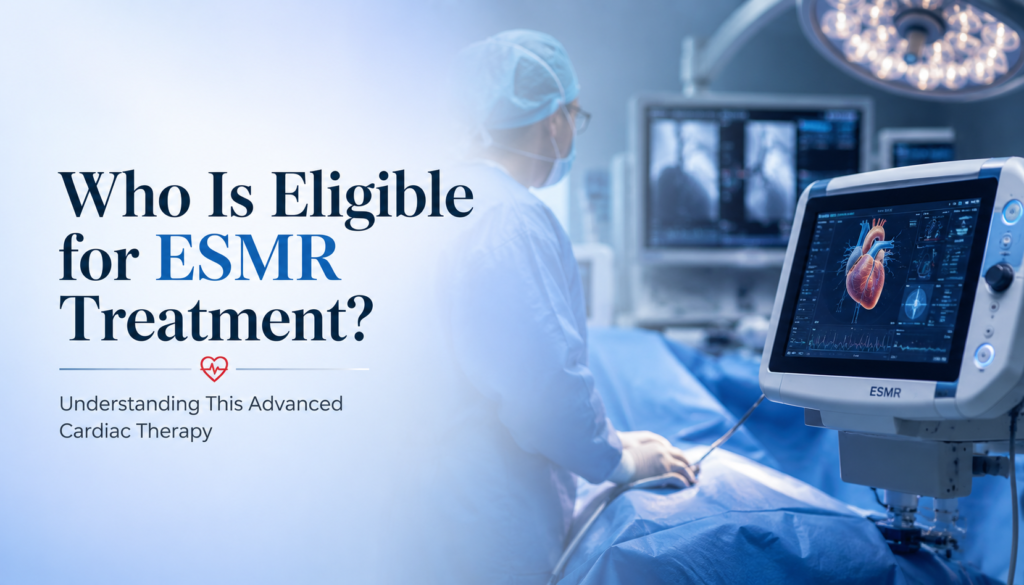
Heart disease remains one of the leading causes of health complications worldwide, and many patients with coronary artery disease (CAD) continue to experience chest pain despite receiving medications or undergoing procedures like angioplasty or bypass surgery. For such individuals, ESMR (Extracorporeal Shockwave Myocardial Revascularization) has emerged as an innovative, non-invasive cardiac treatment that may help improve blood flow to the heart.
A common question among patients and caregivers is: Who is eligible for ESMR treatment? Understanding the eligibility criteria can help patients explore whether this advanced therapy may be a suitable option as part of their cardiac care plan.
What Is ESMR Treatment?
ESMR is an advanced, non-surgical heart blockage treatment that uses low-intensity shockwaves directed at areas of the heart with reduced blood supply. The therapy is designed to stimulate the formation of new blood vessels, a process known as angiogenesis, which may improve circulation to the heart muscle.
Unlike traditional procedures, ESMR does not involve surgery, stents, or general anesthesia, making it a promising option for selected patients.
High-intent keywords:
- ESMR treatment
- ESMR therapy
- Non-invasive cardiac treatment
- Heart blockage treatment without surgery
Who Is Eligible for ESMR Treatment?
ESMR therapy may be considered for patients who meet certain clinical conditions. Eligibility is determined by a cardiologist after a detailed evaluation.
1. Patients with Refractory Angina
Individuals who experience persistent chest pain despite receiving optimal medical treatment may be candidates for ESMR therapy for refractory angina.
2. Patients with Coronary Artery Disease (CAD)
People diagnosed with coronary artery disease treatment needs, especially those with reduced blood flow to the heart muscle, may benefit from ESMR if recommended by their healthcare provider.
3. Patients Who Are Not Ideal Candidates for Surgery
Some patients may not be suitable for bypass surgery or angioplasty because of:
- Advanced age
- Multiple blocked arteries
- Other medical conditions
- High surgical risk
For these individuals, heart blockage treatment without surgery may be explored.
4. Patients with Ongoing Symptoms After Previous Procedures
Even after angioplasty or bypass surgery, some patients continue to experience chest discomfort. In selected cases, ESMR may be considered as part of a comprehensive treatment strategy.
5. Patients Seeking a Non-Invasive Cardiac Treatment
Those looking for an alternative to bypass surgery or an alternative to angioplasty, when clinically appropriate, may discuss ESMR with their cardiologist.
Who May Not Be Eligible?
ESMR is not suitable for every heart patient. Depending on the individual’s medical condition, it may not be recommended for:
- Acute heart attacks requiring emergency treatment
- Unstable cardiac conditions
- Certain severe heart rhythm disorders
- Patients who require immediate surgical intervention
A thorough cardiac assessment is essential before deciding on treatment.
Benefits of ESMR Treatment
Some potential advantages of ESMR therapy include:
- Non-invasive procedure
- No surgical incisions
- No implanted stents
- Minimal recovery time
- May improve blood flow to the heart
- May help reduce angina symptoms
- May improve quality of life in selected patients
How Is ESMR Therapy Performed?
The procedure is typically conducted in multiple sessions. During treatment:
- The patient lies comfortably on a treatment table.
- Cardiac imaging helps identify the target areas.
- Low-intensity shockwaves are delivered to the affected heart muscle.
- Patients can usually return to their normal daily activities shortly after the session, based on their doctor’s advice.
Why Is Medical Evaluation Important?
Although ESMR is an advanced cardiac therapy, patient selection is critical. A cardiologist may review:
- Medical history
- Symptoms
- Angiography reports
- Echocardiogram findings
- Stress test results
- Current medications
This evaluation helps determine whether ESMR is an appropriate treatment option.
Frequently Asked Questions
Is ESMR better than angioplasty or bypass surgery?
ESMR is not a replacement for emergency or medically necessary procedures. It may be considered for selected patients based on their clinical condition and cardiologist’s recommendation.
Is ESMR treatment painful?
The therapy is generally designed to be non-invasive, and many patients tolerate the procedure well.
Can ESMR cure heart blockage?
ESMR aims to improve blood supply to the heart muscle and reduce symptoms in selected patients. Treatment outcomes vary from person to person.
Conclusion
ESMR represents a significant advancement in non-surgical heart blockage treatment and may offer hope for patients with chronic chest pain and coronary artery disease who have limited treatment options. However, the decision to undergo ESMR should always be based on a comprehensive evaluation by a qualified cardiologist.
If you or a loved one experiences persistent angina or has been advised that conventional procedures may not be suitable, discussing ESMR treatment for heart blockage with a cardiac specialist can help determine the most appropriate course of care.