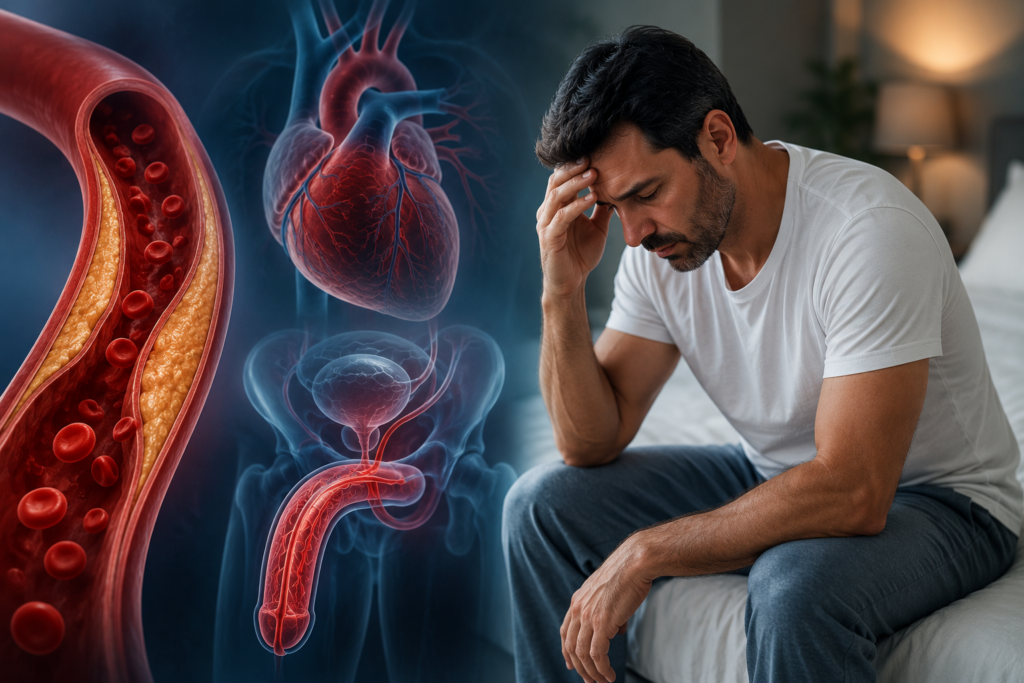

Understanding the causes of erectile dysfunction is often more useful than immediately choosing an ED medicine, shockwave package or injection treatment. Erectile dysfunction, or ED, can develop because of blood-vessel problems, diabetes, hormonal changes, medications, nerve conditions, psychological factors or a combination of several issues.
At Nuva Healthcare, Indiranagar, Bengaluru, a confidential men’s health consultation should begin by understanding why the problem is occurring. Treatment can then be considered according to the likely cause, overall health, previous treatment response and individual preferences.
No responsible clinic should guarantee stronger erections, permanent results or a cure before completing an appropriate medical evaluation.
What Is Erectile Dysfunction?
Erectile dysfunction means recurring difficulty achieving or maintaining an erection firm enough for satisfactory sexual activity.
An occasional erection problem does not necessarily mean you have persistent ED. Temporary difficulties can happen because of tiredness, stress, alcohol, illness, anxiety or circumstances around a particular sexual experience.
Evaluation becomes more useful when the problem:
- happens repeatedly
- has continued for several weeks or longer
- has become progressively worse
- is affecting confidence or relationships
- occurs alongside diabetes, hypertension or other health conditions
- has not responded as expected to previously tried treatment
The important point is that ED is usually a symptom with an underlying explanation, not one single disease with one universal treatment.
Why Erectile Dysfunction Happens
A normal erection depends on several systems working together.
The brain and nerves need to respond to sexual stimulation. Blood vessels need to allow sufficient blood flow into the penis. Hormonal and psychological factors also influence desire and sexual response.
A problem affecting any of these systems can contribute to erection difficulty.
For many men, the cause is mixed. For example, diabetes may affect blood vessels and nerves, while repeated unsuccessful sexual experiences can then create performance anxiety that makes the problem worse.
Common Causes of Erectile Dysfunction
Identifying the likely contributing factors is one of the main purposes of an ED medical evaluation.
Blood-Vessel and Cardiovascular Factors
Healthy erections require adequate blood flow. Conditions affecting blood vessels can therefore contribute to ED.
These may include:
- high blood pressure
- high cholesterol
- coronary artery disease
- peripheral vascular disease
- smoking
- obesity
- metabolic syndrome
- low levels of regular physical activity
This is one reason persistent ED should not always be treated simply by obtaining an erection medicine without looking at broader health.
Diabetes
Diabetes is an important potential contributor to erectile dysfunction.
Over time, elevated blood glucose can affect both the blood vessels and nerves involved in erection function. Other cardiovascular risk factors commonly associated with diabetes may also contribute.
For men with diabetes and ED, evaluation may therefore include reviewing glucose control rather than addressing only the sexual symptom.
Hormonal Factors
Hormonal problems are not the cause of every case of erectile dysfunction, but they can be relevant for selected patients.
Low testosterone may be considered when erection concerns occur alongside symptoms such as reduced sexual desire or other clinical features suggesting testosterone deficiency.
Testing should be clinically guided. Men should not start testosterone simply because they have ED or feel tired.
Other endocrine problems may also require assessment when the medical history suggests them.
Medication-Related Erectile Dysfunction
Some medicines can affect sexual function.
Depending on the individual, possible contributors may include certain medicines used for:
- blood pressure
- depression or other mental-health conditions
- prostate-related conditions
- hormonal treatment
- other chronic diseases
Do not stop a prescribed medicine because you think it may be causing ED.
Instead, discuss the problem with the prescribing doctor. In some situations, dose adjustment or an alternative medicine may be considered, but that decision needs medical supervision.
Nerve-Related Causes
Normal erection function also depends on intact nerve signalling.
Neurological causes may include conditions affecting the brain, spinal cord or peripheral nerves. Diabetes can also cause nerve damage that contributes to ED.
A history of spinal injury, neurological illness or relevant surgery should therefore be mentioned during consultation.
Pelvic or Prostate Surgery
Some men develop erectile difficulties after prostate, bladder or other pelvic procedures.
Treatment planning in this situation can differ from ED caused primarily by vascular risk factors.
Tell the clinician:
- what surgery was performed
- when it was performed
- whether erection function changed afterwards
- whether any rehabilitation or ED treatment has already been tried
Psychological and Relationship Factors
Stress, anxiety, depression, relationship difficulties and performance anxiety can all influence sexual response.
Some men have normal spontaneous or morning erections but experience difficulty mainly in specific sexual situations. That pattern can provide useful information during assessment.
Psychological involvement does not mean that the problem is imaginary. Physical and psychological factors frequently occur together.
Smoking, Alcohol and Lifestyle Factors
Smoking can negatively affect blood-vessel health and may contribute to vascular ED.
Heavy alcohol consumption can also interfere with sexual performance and may contribute to longer-term health problems affecting sexual function.
Sleep, physical activity, body weight and general metabolic health can also be relevant when building an overall treatment plan.
Why Cardiovascular Evaluation Matters in Some Men With ED
Erection difficulties and cardiovascular disease share several risk factors, including diabetes, smoking, hypertension, abnormal cholesterol and obesity.
Current sexual-medicine guidance therefore recommends paying attention to cardiovascular and metabolic health when evaluating men with likely vascular ED.
This does not mean that every man with erectile dysfunction has heart disease.
It means persistent or unexplained ED can provide an opportunity to review:
- blood pressure
- diabetes risk or glucose control
- cholesterol
- smoking
- weight and metabolic health
- known cardiovascular disease
- exercise-related symptoms
Men with unstable chest pain, severe cardiovascular symptoms or certain high-risk heart conditions may need appropriate cardiac assessment before sexual activity or ED treatment is considered.
What Happens During an ED Medical Evaluation?
A confidential consultation usually begins with a conversation rather than a procedure.
The clinician may ask:
- when the erection difficulty began
- whether it occurs consistently
- whether morning erections are still present
- whether sexual desire has changed
- whether the erection begins but is lost too quickly
- whether ejaculation concerns are also present
- whether there is penile pain or curvature
- what medical conditions you have
- what medicines and supplements you use
- whether you smoke or consume alcohol
- what ED treatments you have already tried
The objective is to understand the pattern and identify likely contributing factors before discussing treatment.
What Tests May Be Needed?
Not every patient requires the same investigations.
Depending on your history, appropriate assessment may include:
- blood pressure
- blood glucose or HbA1c
- lipid profile
- morning testosterone
- additional hormonal testing when clinically indicated
A focused examination may also be appropriate.
Specialised tests such as penile vascular assessment are generally reserved for selected patients rather than automatically performed on everyone with ED.
How Is Erectile Dysfunction Treated?
Once the likely cause has been considered, treatment can be matched more appropriately to the patient.
Options may include:
- management of diabetes or cardiovascular risk factors
- lifestyle changes
- prescription oral ED medicines for suitable patients
- vacuum erection devices
- locally administered or injection medication
- psychological or psychosexual support where relevant
- selected procedural options
- specialist surgical treatment for appropriate patients
The best option depends on the cause, treatment preference, other medical conditions and previous response.
Where May Shockwave Therapy Fit?
Low-intensity shockwave therapy is sometimes discussed for selected men with predominantly vascular erectile dysfunction.
Research suggests that some appropriately selected men may experience improvement, but evidence varies according to patient selection, device, energy settings and treatment protocol.
Shockwave therapy should therefore not be advertised as:
- a guaranteed cure
- a permanent erection solution
- a treatment that every man with ED requires
Medical evaluation is particularly important because shockwave therapy aimed at vascular ED would not necessarily address hormonal, neurological or primarily psychological causes.
What About PRP or the P-Shot?
Platelet-rich plasma injections are sometimes promoted for erectile dysfunction under terms such as P-Shot.
Research is still developing, and treatment preparation and injection protocols vary. Current evidence is not sufficient to promise that PRP cures ED or produces permanent erections.
If PRP is being considered, patients should be told clearly about the evidence limitations, alternatives, potential risks and cost before deciding.
Why You Should Not Self-Select ED Medicines or Procedures
A treatment that works for one man may be inappropriate for another.
Medical assessment is particularly important if you:
- have known cardiovascular disease
- experience chest pain or significant breathlessness
- take nitrate medicines for angina
- have uncontrolled blood pressure
- have poorly controlled diabetes
- have significant penile curvature or pain
- developed ED suddenly
- have undergone prostate or pelvic surgery
- are considering testosterone therapy
- have tried several ED treatments without improvement
PDE5 inhibitor medicines commonly used for ED can interact dangerously with nitrate medications. This is another reason to disclose your full medication list rather than purchasing ED tablets without appropriate medical consideration.
What Can Patients Realistically Expect From Treatment?
Treatment aims to improve sexual function where possible while addressing relevant underlying factors.
The likelihood and degree of improvement depend on:
- the underlying cause
- duration and severity of ED
- vascular health
- diabetes control
- hormonal status where relevant
- medications
- psychological factors
- treatment selected
- correct treatment use
Some patients respond well to a first-line option, while others require a combination approach or specialist review.
No treatment should be presented as guaranteeing erection quality or permanent results.
What Does an ED Medical Evaluation Cost in Bangalore?
Patients researching why erectile dysfunction happens often also want to understand the likely cost of consultation and treatment.
There is no single responsible price for all ED care because different patients require different levels of assessment and treatment.
Cost may depend on:
- initial men’s health consultation
- blood tests when clinically required
- additional diagnostic evaluation
- prescription treatment
- devices or procedures
- number of sessions if a procedural treatment is considered
- follow-up consultations
Before paying for a shockwave, PRP or other treatment package, ask why that option is suitable for your particular type of ED and what alternatives are available.
What Reports or Information Should You Bring?
You do not need to arrange every possible test before your first consultation.
If available, bring:
- current prescription medicine list
- supplement list
- recent glucose or HbA1c reports
- lipid profile
- previous hormone reports
- cardiology reports if you have heart disease
- previous prostate or pelvic surgery records
- details of ED medicines previously used
- details of previous shockwave, injection or PRP treatment
Bring the reports you already have. Additional investigations can then be selected according to the consultation.
Confidential ED Evaluation in Indiranagar, Bengaluru
Nuva Healthcare is located in Indiranagar, Bengaluru and may be convenient for patients coming from:
- Indiranagar
- Domlur
- HAL
- Old Airport Road
- Jeevan Bhima Nagar
- Ulsoor
- MG Road
- Koramangala
- nearby Bengaluru neighbourhoods
When comparing men’s health clinics, look beyond advertisements promising quick or permanent results.
A professional consultation should offer privacy, medical evaluation, realistic treatment options, transparent cost information and referral to another specialist when necessary.
Internal Links to Add
Useful internal links within the Nuva Healthcare website can include:
- erectile dysfunction treatment in Bangalore
- men’s sexual health clinic in Bangalore
- ED1000 shockwave therapy in Bangalore
Understanding the Causes of Erectile Dysfunction Is the First Step
If you are trying to understand the causes of erectile dysfunction, avoid assuming that the answer is automatically low testosterone, reduced blood flow or stress.
ED can result from vascular, metabolic, neurological, hormonal, medication-related and psychological factors, and many patients have more than one contributing cause.
A confidential evaluation can help identify relevant health factors and guide the discussion toward treatments that are appropriate for your situation rather than choosing a procedure first.
Book a confidential men’s health consultation at Nuva Healthcare, Indiranagar. Call/WhatsApp +91 98864 82146.
What are the most common causes of erectile dysfunction?
Erectile dysfunction can be related to vascular disease, diabetes, high blood pressure, abnormal cholesterol, smoking, hormonal problems, neurological conditions, medications, pelvic surgery, psychological factors or a combination of these. Medical evaluation can help identify the most relevant factors for an individual patient.
Can stress or anxiety cause erectile dysfunction?
Yes. Stress, performance anxiety, depression and relationship factors can contribute to erection difficulty. Physical and psychological causes may also occur together, so persistent symptoms should not automatically be assumed to be purely psychological.
Can diabetes cause erectile dysfunction?
Diabetes can contribute to ED through effects on blood vessels and nerves. Cardiovascular and metabolic factors that commonly accompany diabetes may also influence erection function, making appropriate diabetes management an important part of evaluation.
Can erectile dysfunction be related to heart health?
ED and cardiovascular disease share several risk factors, including hypertension, diabetes, abnormal cholesterol, obesity and smoking. This does not mean every patient with ED has heart disease, but cardiovascular risk assessment may be appropriate, particularly when vascular ED is suspected.
Does low testosterone always cause erectile dysfunction?
No. Testosterone deficiency can contribute to sexual symptoms in selected men, but it is not the cause of every case of ED. Hormone testing and treatment should be based on medical history, symptoms and appropriate laboratory assessment.
Can my medicines cause erection problems?
Some prescription medicines can affect sexual function. Do not stop a prescribed medicine on your own. Discuss the concern with a healthcare professional who can review whether the medication may be contributing and whether an alternative is appropriate.
What tests are usually done for erectile dysfunction?
Testing depends on the individual. Evaluation may include blood pressure, blood glucose or HbA1c, cholesterol and morning testosterone when clinically appropriate. Specialised vascular or hormonal investigations are generally reserved for selected patients.
Does shockwave therapy cure erectile dysfunction?
No cure or permanent result should be guaranteed. Low-intensity shockwave therapy may be considered for selected patients with predominantly vascular ED, but evidence and treatment response vary. Evaluation is important before deciding whether it is relevant.
Does the P-Shot or PRP permanently treat ED?
PRP or P-Shot treatment should not be presented as a proven permanent cure for erectile dysfunction. Research is still developing, protocols vary and patients should be informed about evidence limitations and alternative treatment options before proceeding.
How can I book a confidential ED medical evaluation in Bangalore?
You can contact Nuva Healthcare in Indiranagar, Bengaluru to discuss erection concerns, medical history, previous treatment, consultation availability and estimated cost confidentially. Call or WhatsApp +91 98864 82146.